Guide · 7 min
Not All Pollen Is the Same — Here's What's Actually Floating Around in UK Air
A practical guide to what's triggering your symptoms, and when

In short
The major tree pollen species causing allergic rhinitis in the UK are birch (Betula spp.), alder (Alnus spp.), hazel (Corylus spp.), oak (Quercus spp.), ash (Fraxinus spp.), and plane (Platanus spp.), with the tree pollen season running broadly from late February through to early June. Birch is the…
The pollen season doesn't start in May
If you've ever felt your eyes itching in February and quietly wondered whether you were imagining it, you weren't. The UK's allergenic pollen season begins in late winter — not late spring — and for some people, it doesn't fully end until October. What we colloquially call "hay fever season" is actually a rolling succession of distinct pollen waves, each driven by different plants, different weather patterns, and different biological triggers. Understanding which wave is hitting you, and when, changes everything about how you manage it.
This isn't just interesting biology. It's the difference between being caught off-guard every April and being genuinely prepared from February onwards.
The science: four overlapping waves
Wave 1: The tree season (late February – early June)
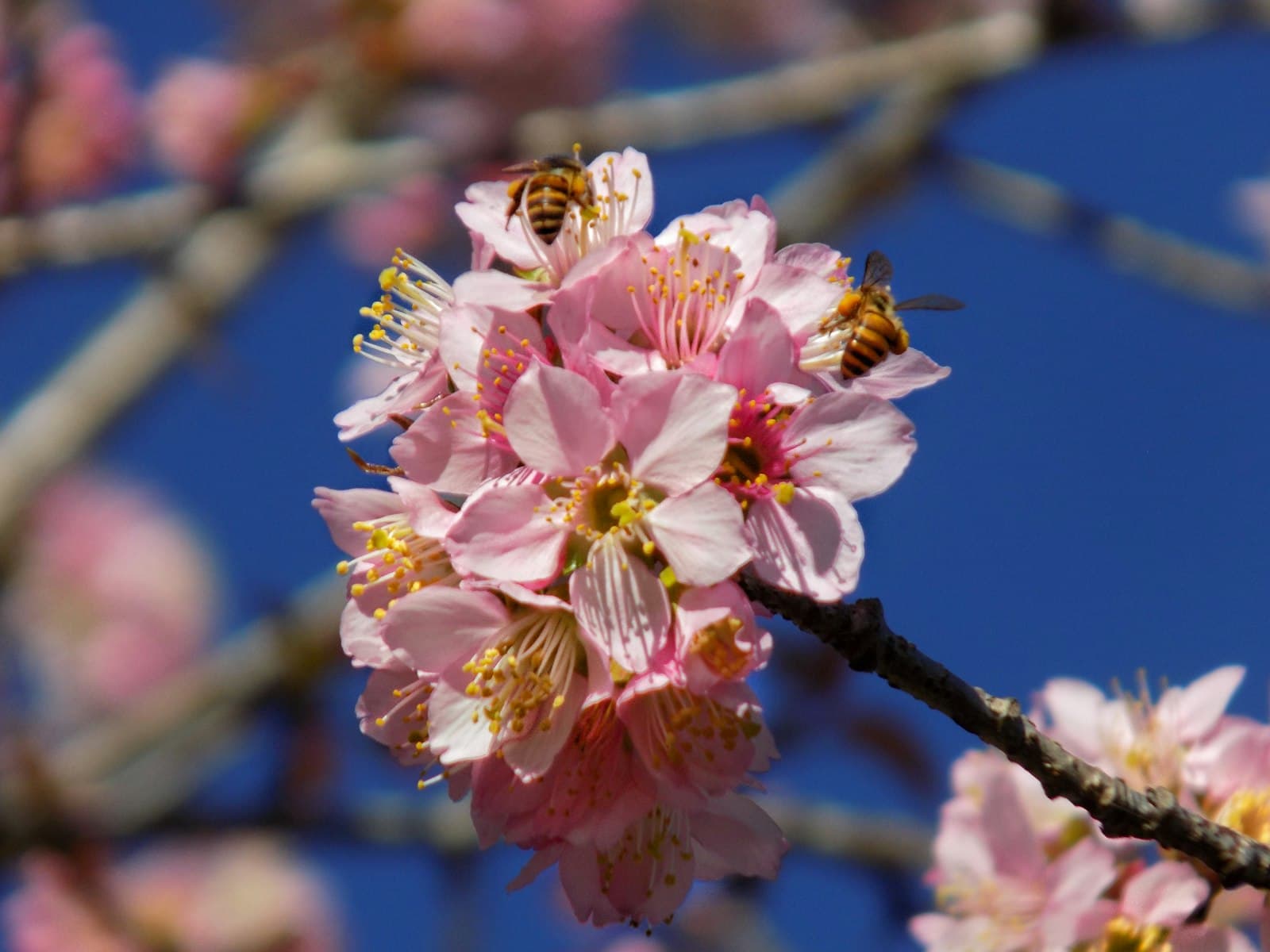
The UK tree pollen season opens with alder (Alnus spp.) and hazel (Corylus spp.), which begin releasing pollen as early as late February and persist through March and April. Birch (Betula spp.) follows, typically peaking between mid-March and early May, and is widely regarded as the most clinically significant tree allergen in Northern and Central Europe. Oak (Quercus spp.), ash (Fraxinus spp.), and plane (Platanus spp.) extend the tree season through May and into June (Adams-Groom et al., 2020).
Tree pollens collectively account for approximately 25% of UK hay fever cases. The reason sensitivity to one tree often means sensitivity to several lies in their shared biology. Birch's major allergen, Bet v 1, belongs to a protein family called PR-10, which appears across the entire Betulaceae and Fagaceae group — alder, hazel, hornbeam, and oak all produce structural homologues. Your immune system, having learned to react to one, frequently flags the others as the same threat (Parikh & Scadding, 1997). This cross-reactivity means a single sensitisation event can effectively give you a two-to-three month tree pollen season.
Birch's Bet v 1 also has a more personal consequence: it shares structural similarities with proteins in apples, peaches, cherries, almonds, hazelnuts, celery, and carrots. This is oral allergy syndrome (OAS) — that itching, tingling, or swelling in the mouth and throat that happens when you eat certain raw fruits and vegetables during or after tree pollen season. It's not a food allergy in the classical sense; it's your immune system confusing plant food proteins for pollen. Grass allergens don't share this food homology to anything like the same degree, which makes birch sensitisation a distinctly more complex phenotype.
Wave 2: The grass season (mid-May – August)
Grass pollen is the dominant driver of UK hay fever, affecting roughly 90–95% of pollen-allergic individuals (Strachan, 1995). The season typically runs from mid-May through July, with a peak in June that represents the highest-intensity allergenic period in the UK year. While grass pollen produces the classic rhinoconjunctivitis picture — sneezing, blocked or runny nose, red and watery eyes — it lacks the widespread food cross-reactivity associated with birch.
There is some evidence that grass pollen allergic patients with more severe disease are also more likely to develop asthma symptoms; one large database analysis suggested asthma frequency of around 20% in grass-sensitised patients, compared to approximately 30% in birch-sensitised patients, though direct head-to-head comparisons in well-designed studies are limited (evidence here remains weak and should be interpreted cautiously).
Wave 3: The weed season (July – October)
Weed pollens are the most underappreciated part of the UK's allergenic year. They affect approximately 20% of hay fever sufferers, and their season extends well into autumn. Mugwort (Artemisia vulgaris) is the most clinically significant UK weed allergen. Nettle (Urtica dioica) is often the most abundant late-summer pollen by sheer count — constituting up to 78% of pollen load in some late-summer samples, compared to just 7% for mugwort — though its clinical significance relative to its abundance is still being studied (Forkel et al., 2019).
Ragweed (Ambrosia artemisiifolia) deserves particular attention. Currently a minor presence in the UK, it is an established and serious allergen across Eastern Europe and the US, and climate modelling projects a four-fold increase in UK ragweed pollen concentrations by 2050 as warmer, drier conditions favour its spread. This is a species worth knowing before it becomes a major personal problem.
The pollen load underneath: regional variation
The UK is not a single pollen environment. Formal regional calendar data from the UK Aerobiology Network (covering 2004–2013) shows that southern and central England experience earlier season onset, longer duration, and higher peak concentrations across almost all major taxa compared to northern England and Scotland, where seasons typically begin one to two weeks later (Adams-Groom et al., 2020).
Urban and rural environments also differ meaningfully. Cities generally have lower overall pollen concentrations and shorter seasons than surrounding countryside — there's simply less source vegetation. London is a notable exception for plane tree pollen, a major urban allergen largely absent from rural calendars. If you've moved between regions, or between city and countryside, your previous lived experience of season timing and severity may not transfer reliably.
What this means for you
If your symptoms seem to drag on for months, or to come in waves with brief reprieves, the most likely explanation isn't that your hayfever is getting worse — it's that you're sensitised to more than one pollen type. Polysensitisation is actually the norm, not the exception. Research consistently shows that monosensitised adults (reactive to just one pollen type) are relatively uncommon; reactivity to multiple species across the tree, grass, and weed groups is the predominant pattern (Ciprandi & Cirillo, 2011).
The practical consequence is significant: if you're sensitised to early tree pollens, grass pollens, and mugwort, your symptomatic window could theoretically span February through September — seven months. That's not a season. That's most of the year.
Knowing your specific sensitisation profile changes when you act. If birch is a major trigger, pre-season preparation in late February becomes as important as managing the June grass peak. If you've never been formally tested and you're suffering across multiple distinct periods, a component-resolved allergy test (which identifies specific proteins like Bet v 1 rather than just "tree pollen") could meaningfully clarify your picture.
The evidence landscape: what we know, and what we don't
It's worth being honest about the limits of the current science, because they're real.
The regional pollen calendar data from Adams-Groom et al. (2020) is the most rigorous UK-specific resource available, but it is based on monitoring data from 2004–2013. A decade of climate shift has occurred since then, and the extent to which seasons have advanced or intensified in the post-2013 period is not yet well characterised at a regional level.
For weed pollens specifically, most of the published sensitisation data comes from German, Romanian, and other continental European populations. UK-specific prevalence figures for nettle, dock, mugwort, and ragweed sensitisation are largely absent from the peer-reviewed literature. We know these are clinically relevant; we don't yet have precise UK population-level numbers.
The comparison between birch and grass pollen symptom severity is also genuinely underpowered. No well-designed head-to-head clinical studies exist. The asthma frequency difference noted above comes from a single database analysis, not a randomised or prospective cohort study. Treat that finding as suggestive, not settled.
Finally, while the logic that polysensitisation extends season length is sound, no controlled studies have directly measured season duration as an outcome in mono- versus multi-sensitised patients. The gap between "biologically plausible" and "clinically proven" matters here.
What Haelo recommends
Know your wave. Tracking when your symptoms start and stop — not just noting that you have hay fever — is the most useful data you can collect. An onset in February points toward tree pollens; symptoms that begin in June and clear by August suggest grass dominance; a September flare implicates weeds.
Don't wait for June. If tree pollens are relevant for you, the window for pre-season preparation (antihistamines, nasal corticosteroids, immunotherapy planning) opens in February, not May.
Factor in where you live. Living in northern Scotland, central Manchester, or rural Devon means meaningfully different season timing and intensity. National forecasts are a starting point; local monitoring data gives you a more accurate signal.
Consider formal sensitisation testing if you're unsure. Particularly if your symptoms span multiple distinct periods or if you also react to raw fruits and vegetables, component-resolved testing can identify which specific proteins are driving your reactions and inform whether immunotherapy is appropriate.
Watch the ragweed situation. If your symptoms are worsening in late summer each year and you live in southern England, ragweed is worth discussing with an allergist — its UK presence is growing, and the trajectory over the next decade looks significant.
Use Haelo to track your personal pattern over time. Population calendars tell you when pollen typically peaks for a region. Your personal log tells you when it peaks for you — and that individual signal is the one that matters most for daily decisions.
Key references
The evidence
What the research actually says
Each answer below is drawn from a graded research review. Confidence reflects the strength of the underlying evidence, not how confident we feel about it.
Which tree pollen species cause the most allergic rhinitis in the UK and when is their season?
The major tree pollen species causing allergic rhinitis in the UK are birch (Betula spp.), alder (Alnus spp.), hazel (Corylus spp.), oak (Quercus spp.), ash (Fraxinus spp.), and plane (Platanus spp.), with the tree pollen season running broadly from late February through to early June. Birch is the dominant tree allergen in Northern and Central Europe and is significant in the UK, though less so than in Scandinavia; early-season trees (alder, hazel) begin in late February to April, birch peaks mid-March to early May, and oak, ash, and plane extend the season into June. Tree pollen collectively accounts for approximately 25% of UK hay fever cases, with grass pollen dominating overall prevalence at around 90%.
How it works
Tree pollen proteins, particularly Bet v 1 and its homologues across the Betulaceae/Fagaceae family (alder, hazel, oak, hornbeam), trigger IgE-mediated type 1 hypersensitivity reactions upon inhalation, causing mast cell degranulation and release of histamine and other mediators that produce rhinitis symptoms. Extensive cross-reactivity between these homologous allergens means sensitisation to one species frequently confers reactivity to others within the group.
Confidence: moderate
How does birch pollen allergy differ from grass pollen allergy in symptoms and severity?
The available evidence suggests birch pollen allergy is more strongly associated with oral allergy syndrome (OAS) and pollen-food cross-reactivity (via Bet v 1 and Bet v 2 allergens) compared to grass pollen allergy, while both conditions produce classic rhinoconjunctivitis symptoms with severity correlating with ambient pollen concentrations. One database study (ALYATEC, n>2000) reported a slightly higher asthma frequency in birch-allergic patients (~30%) versus grass-allergic patients (~20%), though direct head-to-head symptom severity comparisons are lacking in the retrieved literature. Symptom recall is further complicated by overlapping seasons, as grass pollen symptoms can interfere with retrospective reporting of birch pollen symptoms.
How it works
Birch pollen's major allergen Bet v 1 shares structural homology with PR-10 proteins in fruits, nuts, and vegetables, driving food cross-reactivity via IgE cross-recognition, whereas grass pollen allergens (Phl p 1, Phl p 2, Phl p 5) lack this widespread food homology, resulting in predominantly aeroallergen-driven rhinoconjunctivitis without the same degree of food-related reactions.
Confidence: low
Which weed pollens (nettle, dock, mugwort, ragweed) cause significant UK hayfever?
Weed pollens cause clinically significant hay fever in the UK, affecting approximately 20% of hay fever sufferers, though they are secondary to grass pollen which affects ~95% of pollen-allergic individuals. Mugwort and ragweed are explicitly recognised as UK allergenic weed pollens, with ragweed representing an emerging threat projected to increase four-fold in pollen concentration by 2050 due to climate change. Specific UK sensitization prevalence data for individual species (nettle, dock, mugwort, ragweed) remains limited in the published literature.
How it works
Weed pollens contain allergenic proteins including pectate lyases, defensin-like proteins, non-specific lipid transfer proteins, and Ole e 1-like proteins that trigger IgE-mediated sensitization and subsequent mast cell degranulation upon re-exposure. Nettle pollen co-occurs at high concentrations during the mugwort season (constituting up to 78% of late-summer pollen load versus 7% for mugwort), complicating attribution of symptoms to individual species.
Confidence: low
How common is multi-pollen sensitisation and does it worsen overall season length?
Polysensitization is a frequent phenomenon in allergic rhinitis patients, with evidence suggesting it is more common than monosensitization, particularly in adults; the POLISMAIL study noted that monosensitized adult patients are rare, and multiple cross-sectional studies confirm polysensitization as the predominant pattern across diverse populations. However, direct quantitative evidence that multi-pollen sensitization specifically extends or worsens overall allergic season length is largely absent from the current literature. The available studies characterize sensitization patterns and associated clinical severity differences, but do not isolate season duration as an outcome measure.
How it works
Multi-pollen sensitization can arise through genuine co-sensitization to discrete pollen species or via panallergens (e.g., profilins, polcalcins) that share high structural homology across divergent plant families, causing broad cross-reactive IgE responses. Theoretically, reactivity to pollens from sequential flowering species—such as tree pollens in spring followed by grasses in early summer and weeds in late summer/autumn—would cumulatively span a longer symptomatic period than monosensitization to a single pollen type.
Confidence: low
Does the UK pollen calendar differ meaningfully by region (south vs north, urban vs rural)?
UK pollen calendars differ meaningfully by region, with southern and central England experiencing earlier onset, longer duration, and greater intensity across major pollen types (grass, birch, oak, ash) compared to northern England and Scotland, where seasons begin approximately 1–2 weeks later and produce fewer high-count days. Urban areas generally show lower overall pollen concentrations and shorter seasons than rural counterparts due to reduced vegetation cover, though cities like London have unique urban-specific taxa (e.g., plane tree pollen) absent in rural calendars. Regional pollen calendars produced from UK Aerobiology Network monitoring data (2004–2013) formally quantify these spatial differences, replacing a single national calendar with location-specific guidance.
How it works
Latitudinal temperature gradients drive earlier phenological triggering of flowering in southern regions, where accumulated heat units (degree-days above threshold temperatures) are reached sooner in spring. Urbanisation alters local vegetation composition and microclimate, reducing dispersal-source density for most taxa while introducing ornamental species such as plane trees.
Confidence: moderate
Where the evidence runs out
UK-specific, species-level sensitisation prevalence data from population-based studies (e.g., skin prick test surveys) are largely absent, making it difficult to rank individual tree species by clinical importance within the UK. Regional variation across England, Scotland, Wales, and Northern Ireland is poorly quantified, and the impact of emerging threats such as ash dieback on pollen exposure has not been systematically studied. No direct comparative RCTs or systematic reviews were identified that quantify symptom severity or prevalence differences between birch and grass pollen allergies head-to-head; the available studies were primarily designed to evaluate immunotherapy efficacy or cross-reactivity mechanisms rather than phenotypic comparisons. Large epidemiological cohort data with standardized symptom scoring across both pollen seasons are needed to draw robust conclusions. There is a notable absence of UK-specific epidemiological studies quantifying sensitization rates for individual weed pollen species (nettle, dock, mugwort, ragweed) in the British population. Most available evidence derives from German, Romanian, and other continental European studies, limiting direct applicability to the UK climate and pollen environment, and cross-reactivity patterns between these weed species in UK patients have not been well characterised. No controlled cohort studies, systematic reviews, or RCTs directly compare allergic symptom season duration or burden between mono-pollen-sensitized and multi-pollen-sensitized patients, representing a critical evidence gap. Additionally, studies rarely distinguish whether polysensitization reflects true independent sensitization to sequential-flowering species versus cross-reactivity to panallergens, which has fundamentally different implications for season length. Most quantitative regional calendar data derive from a single monitoring period (2004–2013), leaving recent climate-driven phenological shifts post-2013 poorly characterised at a regional level. Direct urban–rural comparisons within the UK specifically are limited, with the strongest urban–rural concentration data coming from non-UK European studies, and no peer-reviewed study provides granular pollen grains/m³ comparisons across all major UK taxa simultaneously by region.
References
- 1.Adams-Groom B, Skjøth C, Selby K et al. · 2020 · Regional calendars and seasonal statistics for the United Kingdom's main pollen allergens
- 2.Parikh A, Scadding GK · 1997 · Fortnightly review: seasonal allergic rhinitis
- 3.Strachan DP · 1995 · Epidemiology of hay fever: towards a community diagnosis
- 4.Ciprandi G, Cirillo I · 2011 · Monosensitization and polysensitization in allergic rhinitis
- 5.Forkel S, Beutner C, Heetfeld A et al. · 2019 · Allergic Rhinitis to Weed Pollen in Germany: Dominance by Plantain, Rising Prevalence, and Polysensitization Rates over 20 Years
- 6.Assing K, Bodtger U, Poulsen L · 2007 · Grass pollen symptoms interfere with the recollection of birch pollen symptoms — a prospective study of suspected, asymptomatic skin sensitization
- 7.Emberlin J, Mullins J, Corden J et al. · 1999 · Regional variations in grass pollen seasons in the UK, long-term trends and forecast models
This article is general information about hayfever, not medical advice. It should not replace guidance from your GP, pharmacist or allergy specialist — particularly if you are pregnant, treating a child, or managing asthma alongside hayfever. Read our medical disclaimer.