Quick read · 5 min
How to train through peak pollen week
When to run outdoors, when to swap indoors, and how to keep the block intact
In short
When to run outdoors, when to swap indoors, and how to keep the block intact
Abandoning your training block through hayfever season isn't the answer, but ignoring the exposure isn't either. A typical outdoor run exposes your lungs to roughly ten times more pollen than a walk over the same distance — partly because you breathe 6–12 times more air per minute, and partly because you switch to mouth-breathing, bypassing your nasal filter entirely.
The fix is to think about your week, not just your next session.
The biology you're training against
At rest you breathe 6–8 litres of air per minute, almost all of it through your nose, which traps the majority of airborne particles before they travel further. A steady run pushes that to 50–100 litres per minute. Push harder and the nasal filter can't keep up, so your mouth opens, and roughly 20–50% more pollen makes it to the bronchi. Each 10 grains/m³ increase in ambient pollen raises lower respiratory symptom risk by around 2% — small per unit, large over a high-count week.
The paradox worth holding onto: long-term aerobic training improves allergic rhinitis symptoms overall. You don't want to stop. You want to be smart about when and how.
The weekly structure
Build the week around pollen counts, not just your usual schedule.
Monday — quality session, indoors or low-count window. If you've got an interval session or a tempo run on the plan, get it done where exposure is low — gym treadmill, indoor track, or a late-afternoon outdoor slot after rain.
Tuesday — easy outdoor run, late afternoon. Pollen counts typically drop from mid-afternoon onward. A 5–6pm slot is your best outdoor window on most days.
Wednesday — strength or cross-training indoors. A genuine rest from outdoor exposure mid-week resets the cumulative load.
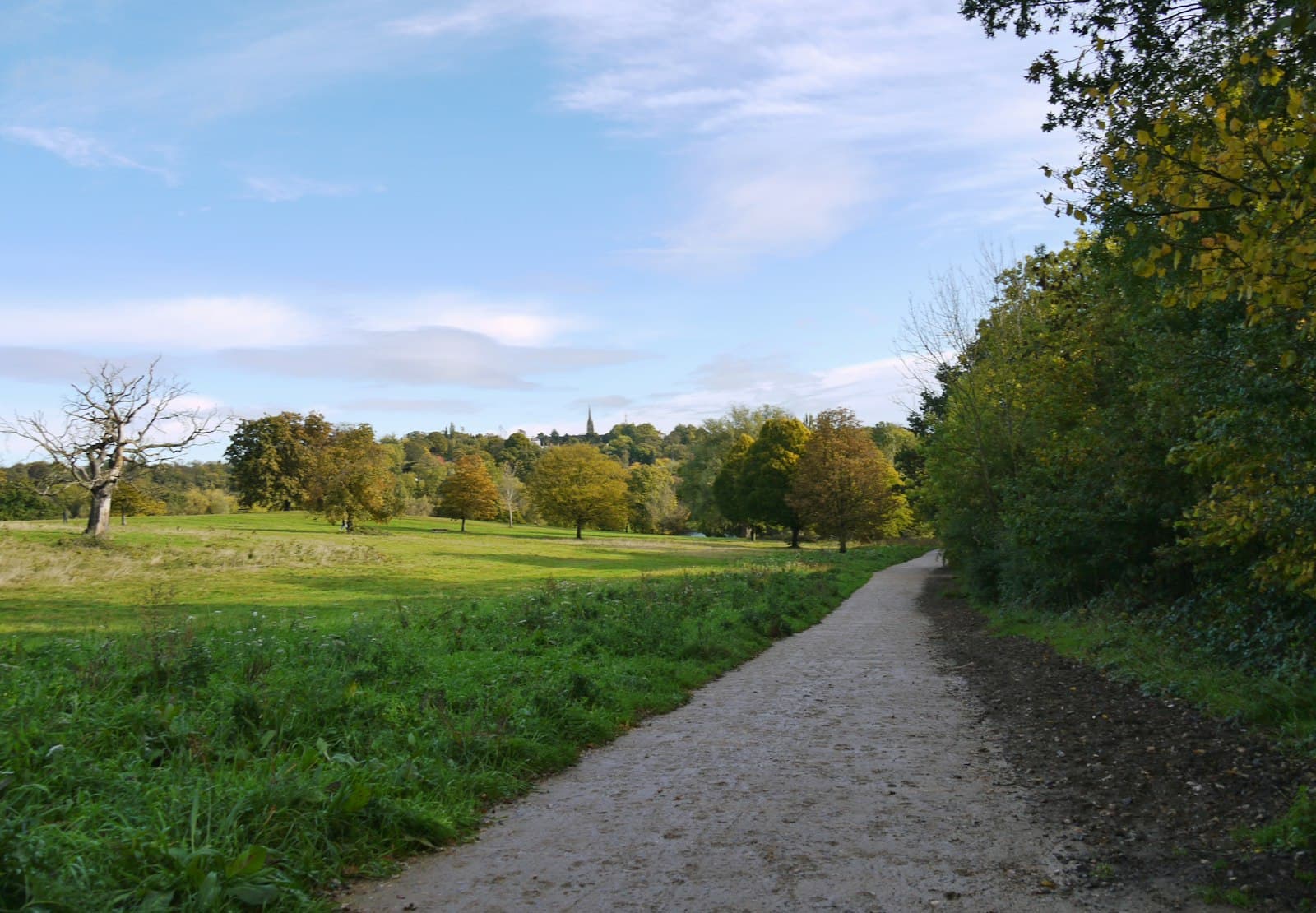
Thursday — easy run, sheltered route. Riverside, coastal, urban hard-surface, or wooded routes with low grass density. Avoid open meadows and parks at all costs during grass-pollen peak.
Friday — rest or mobility. Standard.
Saturday — long run, weather-permitting. Check the forecast 48 hours out. If counts are very high, swap to a long indoor session or split into two shorter outdoor runs in the evening windows.
Sunday — easy outdoor, after rain if possible. Rain washes pollen out of the air for several hours afterwards — the best post-rain window is genuinely glorious to run in.
Before the session
- Take your antihistamine 2–3 hours before the session if you're a morning runner. Cetirizine, loratadine, fexofenadine, and bilastine all peak in plasma in that window.
- Saline rinse before you leave. Clear the load that's already there before adding more.
- Don't skip the eye drops if you're prone to ocular symptoms. A run with streaming eyes is worse than a slow run with comfortable ones.
During the session
- Try to maintain nose-breathing as long as possible. The longer you keep it, the more of your natural filter you're using.
- If you can choose your route on the day, downwind of grass is worse, upwind is better. Coastal onshore breeze dilutes inland counts.
- Don't push intensity on a high-count day. The harder you go, the more you mouth-breathe, the more exposure you accumulate.
After the session
- Shower and wash hair within 30 minutes. Pollen on hair, skin, and kit is loading your night ahead.
- Kit goes straight into the wash, not back on the bedroom floor.
- A second saline rinse helps clear what your nose has caught.
- Cold water on the eyes if they're irritable.
When to swap indoor
It's worth having a clear personal threshold rather than deciding session by session.
- Very high pollen count + dry, windy conditions: indoor.
- Personal "bad reaction" symptoms above baseline: indoor or rest.
- A specific event coming up where you need to be sharp: protect it with an indoor session the day before.
A treadmill session isn't a failure — it's part of the same plan that gets you through the season with your training intact.
If you have asthma alongside hayfever
This piece assumes hayfever without significant asthma. If you have both, the same logic applies but the stakes are higher — talk to your GP or asthma nurse about your training plan and whether your preventer inhaler dose needs adjusting through peak season.
The runners who handle hayfever season best aren't the ones who push through. They're the ones who plan around the biology and treat outdoor sessions as a resource to spend carefully — not a habit to defend.
The evidence
What the research actually says
Each answer below is drawn from a graded research review. Confidence reflects the strength of the underlying evidence, not how confident we feel about it.
How does prolonged outdoor exercise (athletes, runners) interact with pollen exposure and symptoms?
Prolonged outdoor exercise significantly amplifies pollen exposure in athletes due to substantially elevated ventilation rates (50-100 L/min vs. 6-8 L/min at rest) and a shift to oral breathing, increasing allergen deposition in the lower airways and exacerbating allergic rhinitis symptoms. Rhinitis prevalence among athletes ranges from 27-74% across systematic reviews, with pollen-induced allergic rhinitis shown to impair sports performance through nasal congestion, ocular irritation, sleep disruption, and exercise-induced bronchoconstriction. A meta-analysis of 26 studies found each 10 grains/m³ increase in pollen concentration raises lower respiratory symptom risk by approximately 2% and upper/ocular symptom burden by 7-11%, effects that are amplified in athletes due to greater cumulative outdoor exposure time.
How it works
During intense exercise, the obligatory shift to oral breathing bypasses nasal mucociliary filtration, allowing an estimated 20-50% more pollen particles to reach the bronchi, where they trigger mast cell degranulation and type 2 eosinophilic inflammation in sensitized individuals. Elevated minute ventilation further increases the total inhaled allergen dose in a dose-dependent manner, with polysensitized individuals showing measurable rises in FeNO (a marker of airway inflammation) proportional to pollen load.
Confidence: moderate
Does exercise influence allergy symptoms?
Moderate-intensity aerobic exercise (running, cycling, swimming) consistently demonstrates acute and chronic improvements in allergic rhinitis symptoms, including reductions in nasal congestion, rhinorrhea, and total nasal symptom scores, alongside improved nasal airflow metrics such as peak nasal inspiratory flow. A nationwide cross-sectional study and Mendelian randomization analyses further support a causal association between regular physical activity and reduced allergic rhinitis severity in adults. Resistance exercise also shows emerging evidence of benefit, and winter outdoor exercise has been shown to reduce allergic airway inflammation in a randomized controlled trial.
How it works
Moderate exercise appears to shift the Th1/Th2 cytokine balance away from the pro-allergic Th2 response, reducing levels of inflammatory mediators (e.g., IL-4, IL-5) while potentially increasing anti-inflammatory cytokines, thereby attenuating nasal mucosal inflammation. Sympathetic nervous system activation during exercise may also induce transient nasal decongestion via adrenergic vasoconstriction of nasal vasculature.
Confidence: moderate
How does wind speed influence pollen levels?
Wind speed has a nonlinear, complex relationship with airborne pollen concentrations: moderate wind speeds (approximately 1–5 m/s) generally facilitate pollen release from anthers and aerodynamic suspension, producing positive correlations with pollen levels, while very low speeds limit dispersal and high speeds (>5 m/s) tend to dilute or deposit pollen, reducing airborne concentrations. The relationship is further modified by pollen source type (local vs. distant), wind direction relative to source areas, and rapid speed fluctuations, which can transiently spike concentrations during deceleration events.
How it works
Wind physically detaches pollen grains from anthers and maintains them in aerodynamic suspension; as wind speed increases beyond an optimal threshold, turbulent mixing and gravitational settling accelerate deposition, while atmospheric boundary layer dynamics and turbulence modulate vertical mixing and horizontal transport distance from source populations.
Confidence: moderate
How quickly do different antihistamines reach peak effectiveness after dosing?
Antihistamines generally reach peak plasma concentrations within 1-3 hours after oral administration, though there is meaningful variation between agents. Second-generation antihistamines like cetirizine reach Tmax rapidly (0.5-1 hour), while others such as bilastine (1.1-1.4 hours), loratadine, and fexofenadine follow at 1-3 hours; first-generation agents are similarly absorbed quickly but their longer half-lives (e.g., ~20 hours for chlorpheniramine) can prolong CNS effects. Clinical onset of symptom relief, as measured by histamine wheal-and-flare suppression, broadly aligns with these pharmacokinetic profiles, with meaningful antihistaminic activity typically observed within 1-2 hours post-dose.
How it works
H1-receptor antagonists are absorbed through the gastrointestinal tract and competitively block peripheral and, for first-generation agents, central H1 receptors; peak receptor occupancy and pharmacodynamic effect correlate broadly with peak plasma concentrations, though tissue distribution and receptor binding kinetics can create a slight lag between Tmax and maximal clinical effect. Second-generation agents generally have lower CNS penetration due to P-glycoprotein efflux and protein binding characteristics, confining their primary effects to peripheral H1 receptors.
Confidence: moderate
Can nasal irrigation reduce allergen load?
Nasal irrigation with saline solutions effectively reduces allergen load in nasal passages through mechanical clearance, with a 2012 meta-analysis (Hermelingmeier et al.) demonstrating a 27.66% reduction in AR symptoms, 66% decrease in medication use, and 31.19% improvement in mucociliary clearance. Multiple RCTs and comparative studies confirm that nasal irrigation—particularly high-volume, low-pressure methods used 2–3 times daily—provides clinically meaningful symptom relief and, when combined with intranasal steroids, outperforms either treatment alone. High-volume irrigation (125–176 mL, 3x/day) in steroid-free AR patients has also been shown to prevent seasonal IgE elevation, suggesting direct attenuation of allergen-driven immune responses.
How it works
Saline irrigation mechanically dilutes and flushes allergens, inflammatory mediators, and mucus from nasal mucosa, preserving epithelial barrier integrity and limiting allergen penetration and subsequent IgE sensitization. Hypertonic solutions additionally reduce mucosal edema and restore impaired mucociliary clearance, further accelerating allergen removal from the nasal cavity.
Confidence: moderate
References
- 1.Surda P, Walker A, Putala M · 2017 · Prevalence of Rhinitis in Athletes: Systematic Review
- 2.Salem L, Dao V-A, Shah-Hosseini K · 2019 · Impaired sports performance of athletes suffering from pollen-induced allergic rhinitis: a cross-sectional, observational survey in German athletes
- 3.10.1017/S0022215118000026
- 4.10.33590/emj/10310443
- 5.10.1016/j.csm.2004.12.006
- 6.10.1097/JSM.0000000000001263
- 7.Tongtako W, Klaewsongkram J, Mickleborough T et al. · 2025 · Comparative analysis of acute effects of different aerobic exercises on clinical symptoms and cytokine levels in patients with allergic rhinitis: A randomized crossover study
- 8.Park J, Park JH, Park J et al. · 2020 · Association between allergic rhinitis and regular physical activity in adults: A nationwide cross-sectional study
- 9.10.1097/MD.0000000000044159
- 10.10.3390/ijerph16112040
- 11.10.12932/AP-040417-0066
- 12.10.5572/KOSAE.2013.29.6.780
- 13.Emberlin JC, Norris-Hill J · 2018 · The Influence of Wind Speed on the Ambient Concentrations of Pollen from Gramineae, Platanus, and Betula in the Air of London, England
- 14.Andújar-Maqueda J, Ortiz-Amezcua P, Cariñanos P, et al. · 2025 · The Role of Atmospheric Boundary Layer Wind and Turbulence on Surface Pollen Levels
- 15.10.2307/1937537
- 16.10.1016/J.SCITOTENV.2003.11.021
- 17.10.2165/00003088-198510060-00002
- 18.10.1201/9780429276965-12
- 19.10.4103/0378-6323.42907
- 20.10.1016/S0002-9343(02)01436-5
- 21.Hermelingmeier KE, Weber RK, Hellmich M, et al. · 2012 · Nasal irrigation as an adjunctive treatment in allergic rhinitis: A systematic review and meta-analysis
- 22.10.18502/ijaai.v24i1.18016
- 23.10.1007/s00405-025-09392-y
- 24.10.18410/JEBMH/2017/578
- 25.10.30659/sainsmed.v14i1.31474
This article is general information about hayfever, not medical advice. It should not replace guidance from your GP, pharmacist or allergy specialist — particularly if you are pregnant, treating a child, or managing asthma alongside hayfever. Read our medical disclaimer.