Quick read · 2 min
Five Tells That Say It's Hayfever
How to spot the difference between allergic rhinitis and yet another cold
In short
How to spot the difference between allergic rhinitis and yet another cold
If your child seems to have a cold that never quite ends — or comes back at exactly the same point every spring — it probably isn't a cold at all.
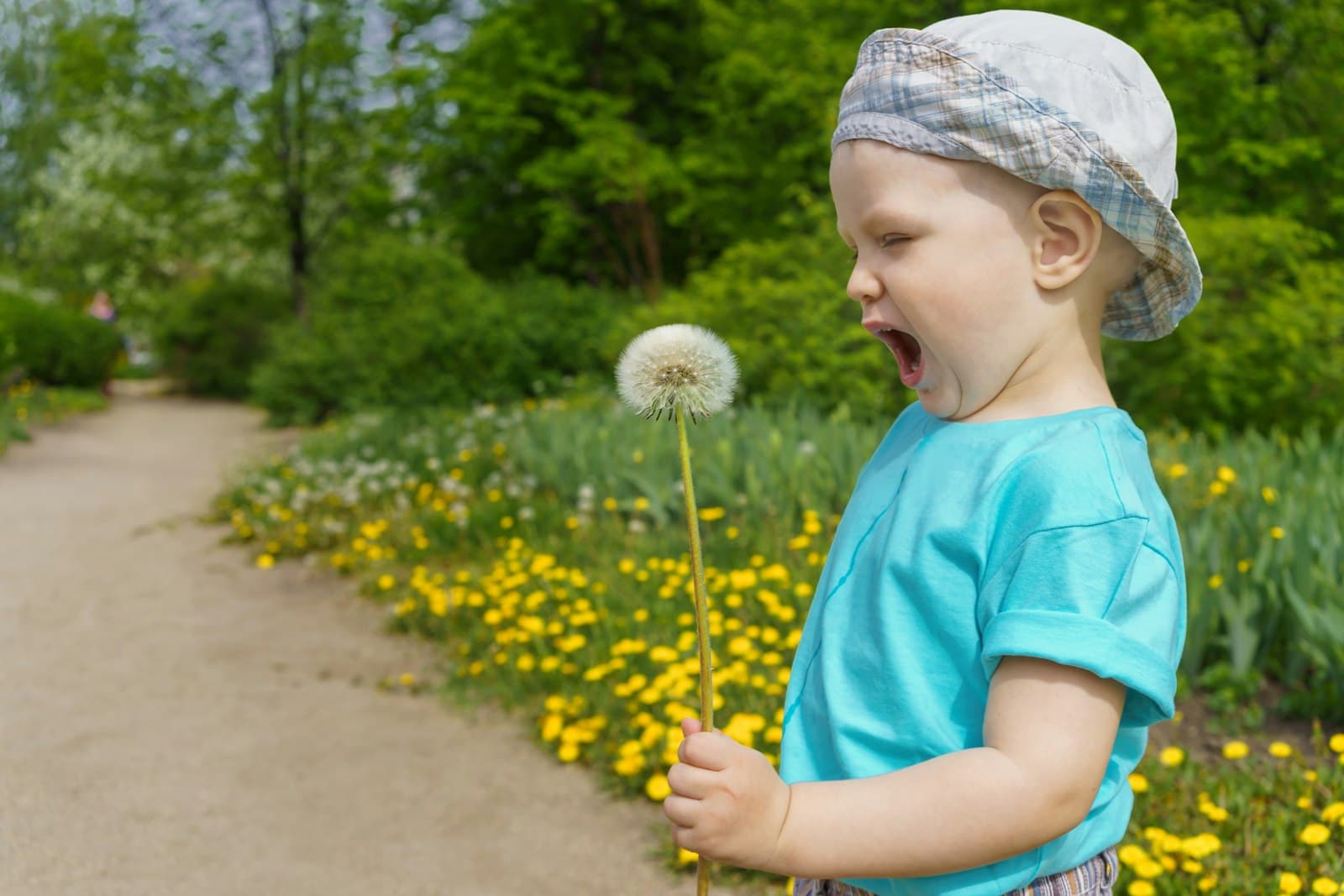
Seasonal allergies and viral colds share a lot of surface-level overlap, but five signs consistently separate them. First, watch for the nose rub: children with hayfever instinctively swipe their palm upward across the tip of their nose — so often that a faint horizontal crease can form across the bridge over time. Second, notice the calendar: allergic symptoms return at the same point each year, triggered by whichever pollen is peaking, rather than arriving unpredictably the way infections do. Third, duration tells you a lot — a cold clears in 7–10 days; hayfever symptoms stretch for weeks, for as long as the pollen is in the air. Fourth, the mucus stays clear and watery rather than thickening to yellow or green (thicker, coloured mucus is a sign of infection). Fifth, look for mouth-breathing and dark circles under the eyes (sometimes called allergic shiners) — both caused by persistent nasal congestion that a child can't fully relieve.
The underlying biology is a case of mistaken identity. When pollen lands on the nasal lining, IgE antibodies — produced during a previous exposure — trigger mast cells to release histamine, causing the swelling, itch, and watery discharge that look so much like infection. There's no virus, no fever, and no meaningful dip in appetite or energy. Those absences matter: a child with hayfever usually eats and plays normally.
Research in paediatric allergic rhinitis (including data from the ADRIAL cohort and multiple longitudinal birth studies) confirms that unmanaged childhood hayfever links to school absence, reduced classroom concentration, and the atopic march — the well-documented tendency for untreated allergic disease to progress from eczema to rhinitis to asthma.
If these five signs fit, speak to a pharmacist or GP about an age-appropriate intranasal corticosteroid or non-sedating antihistamine — started before the season your child typically struggles, not after.
If you notice wheezing, a persistent cough, or any chest tightness alongside nasal symptoms, see a doctor — that's beyond hayfever territory.
Terms in this article
- Mast cell
- An immune cell that stores histamine and releases it when it meets an allergen like pollen.Most hayfever symptoms start with mast cells releasing their contents. Calming them is the goal of most allergy medication.
The evidence
What the research actually says
Each answer below is drawn from a graded research review. Confidence reflects the strength of the underlying evidence, not how confident we feel about it.
How does childhood hayfever differ from adult presentation?
Childhood allergic rhinitis differs from adult presentation in several key ways: children more commonly experience intermittent (seasonal) disease with higher classified severity despite lower subjective symptom scores, while adults tend toward persistent, perennial symptoms with greater self-reported burden. Children exhibit a stronger association with atopic comorbidities including asthma, conjunctivitis, atopic dermatitis, otitis media, and adenoid hypertrophy, whereas adults more frequently report sleep disturbance and work productivity loss. Quality of life impacts in children are predominantly expressed through impaired school performance, concentration difficulties, and developmental concerns rather than the occupational and sleep-related impairments dominant in adults.
How it works
The pediatric immune system is in an active sensitization phase, predisposing children to IgE-mediated polysensitization and the sequential progression of atopic march (eczema → rhinitis → asthma), driven by Th2-skewed immune responses and ongoing allergen exposure during critical developmental windows. Anatomical factors unique to children, including Eustachian tube immaturity and adenoidal tissue prominence, amplify nasal obstruction and predispose to middle ear and sinus complications not typically seen in adult disease.
Confidence: moderate
What is the atopic march and how does childhood eczema predict later hayfever and asthma?
The atopic march describes a sequential progression of allergic diseases beginning with atopic dermatitis (eczema) in infancy, followed by allergic rhinitis (hay fever) and asthma in later childhood or adulthood. Longitudinal birth cohort studies consistently demonstrate that childhood eczema significantly predicts subsequent development of atopic asthma and hay fever, with affected children carrying approximately a 50% risk of developing asthma. However, the march is not strictly linear or universal—co-occurrence, variable sequencing, and non-progression are common, and eczema predicts atopic but not non-atopic asthma specifically.
How it works
Filaggrin gene mutations and skin barrier dysfunction in eczema allow epicutaneous allergen penetration and Staphylococcus aureus colonization, driving Th2-skewed immune responses (IL-4, IL-13, IgE production, eosinophilia) that systemically predispose to nasal mucosal inflammation (allergic rhinitis) and airway hyperreactivity (asthma). Importantly, allergic sensitization appears to be a critical intermediary step, as sensitized children with atopic dermatitis show substantially stronger progression to respiratory atopic disease than non-sensitized children.
Confidence: moderate
References
- 1.Izquierdo-Domínguez A, Jauregui I, Cuvillo A et al. · 2017 · Allergy rhinitis: similarities and differences between children and adults
- 2.Izquierdo-Domínguez A, Valero A, Mullol J · 2013 · Comparative Analysis of Allergic Rhinitis in Children and Adults
- 3.Goniotakis I, Perikleous EP, Fouzas S et al. · 2023 · A Clinical Approach of Allergic Rhinitis in Children
- 4.10.1007/s11882-019-0843-9
- 5.Swain SK · 2025 · Allergic rhinitis in pediatric age group: a review
- 6.Martin PE, Matheson MC, Gurrin L et al. · 2011 · Childhood eczema and rhinitis predict atopic but not nonatopic adult asthma: a prospective cohort study over 4 decades
- 7.10.1111/all.13228
- 8.Hopper JL, Bui QM, Erbas B et al. · 2012 · Does eczema in infancy cause hay fever, asthma, or both in childhood? Insights from a novel regression model of sibling data
- 9.Owens L, Laing I, Zhang G et al. · 2018 · Prevalence of allergic sensitization, hay fever, eczema, and asthma in a longitudinal birth cohort
- 10.10.1542/PEDS.2018-2420N
This article is general information about hayfever, not medical advice. It should not replace guidance from your GP, pharmacist or allergy specialist — particularly if you are pregnant, treating a child, or managing asthma alongside hayfever. Read our medical disclaimer.