Quick read · 4 min
The garden you actually want during hayfever season
Low-pollen plants, smart timing, and who should hold the mower
In short
Low-pollen plants, smart timing, and who should hold the mower
A garden you can sit in during peak season isn't a fantasy — it's mostly about plant choice. The pollens that cause hayfever come overwhelmingly from wind-pollinated plants: grasses, most trees, and many weeds. Insect-pollinated flowers — the showy, scented, brightly-coloured ones bees and butterflies actually visit — produce pollen that's heavy, sticky, and almost entirely irrelevant to your immune system.
You can have a beautiful, pollinator-friendly garden that doesn't make your hayfever worse. Here's how to think about it.
The plants to plant more of
Insect-pollinated flowers
Bright, often scented, with conspicuous pollen visible on the anthers:
- Roses, peonies, foxgloves, hellebores
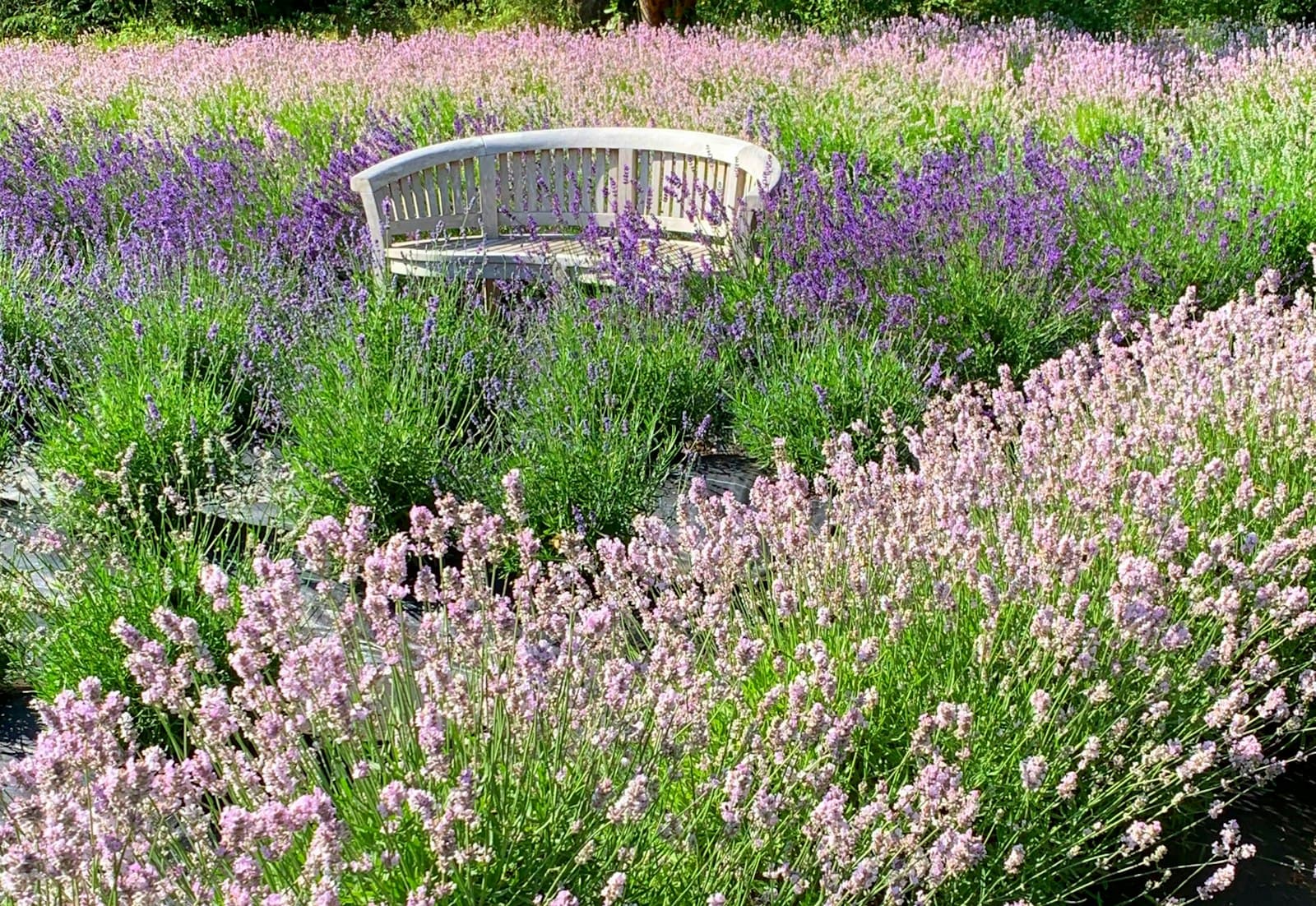
- Lavender, rosemary, thyme, mint, sage
- Geraniums, fuchsias, snapdragons, hollyhocks
- Sunflowers (despite the name — their pollen is sticky and bee-borne)
- Most spring bulbs: tulips, daffodils, hyacinths, alliums
These can be planted abundantly with no hayfever cost.
Single-flowered varieties over doubles
Counterintuitively, some breeders have developed double-flowered varieties with reduced or absent pollen — but the wider biodiversity case favours single-flowered varieties that support pollinators. Both are hayfever-friendly.
Female-only varieties of dioecious plants
Some trees and shrubs have separate male and female plants. The males release pollen; the females catch it. Female-only varieties exist for several common species — your nursery can advise.
The plants to think twice about
Anything wind-pollinated
This is the rule. If a plant's flowers are small, drab, and unscented, there's a good chance it's wind-pollinated.
- Most lawn grasses — the single biggest UK hayfever trigger
- Birch — major spring trigger, particularly painful in northern Europe
- Oak, ash, hornbeam, alder, hazel — early-season tree pollens
- Cypress and yew — winter and very early spring pollen
- Ragweed — late summer trigger, growing more common in southern England
Common ornamentals worth avoiding if you're sensitive
- Olive trees — increasingly fashionable in UK gardens, highly allergenic
- Privet hedging — flowers produce significant pollen
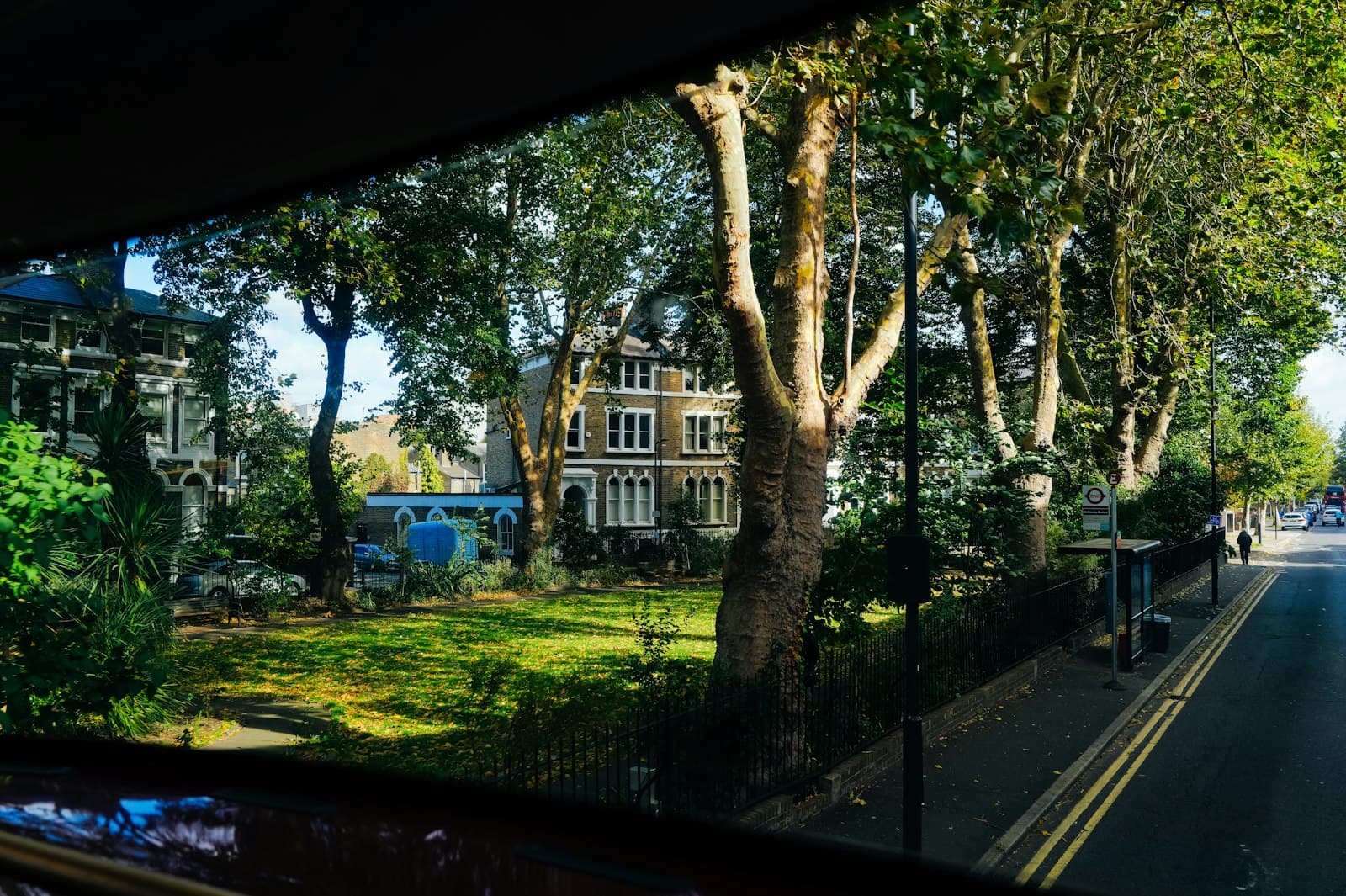
- Plane trees — both pollen and irritant hairs
- Pampas grass — both visible and highly allergenic
The lawn question
Lawn grass is the single most allergenic plant in most British gardens. Three options:
1. Replace it. Clover lawns, chamomile lawns, gravel and Mediterranean planting, decked or paved areas with raised beds. Less mowing, more biodiversity, no grass pollen.
2. Choose lower-allergen grass species. If you want a green lawn, certain fine fescues and bent-grasses produce less pollen than ryegrass mixtures. Worth asking specifically.
3. Mow more often, shorter. Grass flowers when allowed to grow tall. Frequent close mowing prevents most of the pollen release. The downside is that you're spending more time in close contact with grass — see the next section.
Who holds the mower
If hayfever-sensitive: not you, ideally.
- Mowing pushes ambient grass pollen sky-high in your immediate vicinity.
- A grass-allergic person mowing for an hour gets the equivalent exposure of a full bad commute day, concentrated.
- If you must mow, a properly-fitted FFP2 mask (not a surgical mask) plus wraparound sunglasses cuts exposure meaningfully. Shower and change immediately afterwards.
The same applies to strimming, hedge-cutting during flowering periods, and raking.
Timing your time outside
Pollen counts within a garden follow the same daily pattern as elsewhere:
- Worst: first two hours after sunrise; warm dry windy afternoons.
- Best: late evening (after sunset is reliably lower); immediately after rain; cool overcast days.
A garden coffee at 7am during grass season is a worse decision than a garden glass of wine at 9pm.
Practical layout choices
- Sheltered seating away from grass and downwind of any hedge or tree boundary. Even a small partition matters.
- Paved or decked areas closer to the house, planted borders further out. You spend more time on the hard surface, so the closer-in plants should be insect-pollinated.
- A water feature. Damp air and water surfaces both catch airborne pollen and reduce local counts modestly.
- Avoid bringing fresh-cut grass clippings into compost near seating areas during peak.
A note on neighbours
Your hayfever is influenced by what's growing within a few hundred metres of you. If a neighbour has a heavily-grass garden, or a row of birch trees, your own perfect garden may still leave you affected. There's no magic answer here — but it's worth knowing why your "low-pollen" garden may not feel low-pollen on certain days.
A pollinator-friendly, beautiful garden isn't in tension with hayfever management. They both lead you to the same plants: showy, scented, insect-pollinated, biodiverse. The garden the bees want is mostly the garden you want too.
The evidence
What the research actually says
Each answer below is drawn from a graded research review. Confidence reflects the strength of the underlying evidence, not how confident we feel about it.
How does wind speed influence pollen levels?
Wind speed has a nonlinear, complex relationship with airborne pollen concentrations: moderate wind speeds (approximately 1–5 m/s) generally facilitate pollen release from anthers and aerodynamic suspension, producing positive correlations with pollen levels, while very low speeds limit dispersal and high speeds (>5 m/s) tend to dilute or deposit pollen, reducing airborne concentrations. The relationship is further modified by pollen source type (local vs. distant), wind direction relative to source areas, and rapid speed fluctuations, which can transiently spike concentrations during deceleration events.
How it works
Wind physically detaches pollen grains from anthers and maintains them in aerodynamic suspension; as wind speed increases beyond an optimal threshold, turbulent mixing and gravitational settling accelerate deposition, while atmospheric boundary layer dynamics and turbulence modulate vertical mixing and horizontal transport distance from source populations.
Confidence: moderate
Does exercise influence allergy symptoms?
Moderate-intensity aerobic exercise (running, cycling, swimming) consistently demonstrates acute and chronic improvements in allergic rhinitis symptoms, including reductions in nasal congestion, rhinorrhea, and total nasal symptom scores, alongside improved nasal airflow metrics such as peak nasal inspiratory flow. A nationwide cross-sectional study and Mendelian randomization analyses further support a causal association between regular physical activity and reduced allergic rhinitis severity in adults. Resistance exercise also shows emerging evidence of benefit, and winter outdoor exercise has been shown to reduce allergic airway inflammation in a randomized controlled trial.
How it works
Moderate exercise appears to shift the Th1/Th2 cytokine balance away from the pro-allergic Th2 response, reducing levels of inflammatory mediators (e.g., IL-4, IL-5) while potentially increasing anti-inflammatory cytokines, thereby attenuating nasal mucosal inflammation. Sympathetic nervous system activation during exercise may also induce transient nasal decongestion via adrenergic vasoconstriction of nasal vasculature.
Confidence: moderate
How does prolonged outdoor exercise (athletes, runners) interact with pollen exposure and symptoms?
Prolonged outdoor exercise significantly amplifies pollen exposure in athletes due to substantially elevated ventilation rates (50-100 L/min vs. 6-8 L/min at rest) and a shift to oral breathing, increasing allergen deposition in the lower airways and exacerbating allergic rhinitis symptoms. Rhinitis prevalence among athletes ranges from 27-74% across systematic reviews, with pollen-induced allergic rhinitis shown to impair sports performance through nasal congestion, ocular irritation, sleep disruption, and exercise-induced bronchoconstriction. A meta-analysis of 26 studies found each 10 grains/m³ increase in pollen concentration raises lower respiratory symptom risk by approximately 2% and upper/ocular symptom burden by 7-11%, effects that are amplified in athletes due to greater cumulative outdoor exposure time.
How it works
During intense exercise, the obligatory shift to oral breathing bypasses nasal mucociliary filtration, allowing an estimated 20-50% more pollen particles to reach the bronchi, where they trigger mast cell degranulation and type 2 eosinophilic inflammation in sensitized individuals. Elevated minute ventilation further increases the total inhaled allergen dose in a dose-dependent manner, with polysensitized individuals showing measurable rises in FeNO (a marker of airway inflammation) proportional to pollen load.
Confidence: moderate
References
- 1.10.5572/KOSAE.2013.29.6.780
- 2.Emberlin JC, Norris-Hill J · 2018 · The Influence of Wind Speed on the Ambient Concentrations of Pollen from Gramineae, Platanus, and Betula in the Air of London, England
- 3.Andújar-Maqueda J, Ortiz-Amezcua P, Cariñanos P, et al. · 2025 · The Role of Atmospheric Boundary Layer Wind and Turbulence on Surface Pollen Levels
- 4.10.2307/1937537
- 5.10.1016/J.SCITOTENV.2003.11.021
- 6.Tongtako W, Klaewsongkram J, Mickleborough T et al. · 2025 · Comparative analysis of acute effects of different aerobic exercises on clinical symptoms and cytokine levels in patients with allergic rhinitis: A randomized crossover study
- 7.Park J, Park JH, Park J et al. · 2020 · Association between allergic rhinitis and regular physical activity in adults: A nationwide cross-sectional study
- 8.10.1097/MD.0000000000044159
- 9.10.3390/ijerph16112040
- 10.10.12932/AP-040417-0066
- 11.Surda P, Walker A, Putala M · 2017 · Prevalence of Rhinitis in Athletes: Systematic Review
- 12.Salem L, Dao V-A, Shah-Hosseini K · 2019 · Impaired sports performance of athletes suffering from pollen-induced allergic rhinitis: a cross-sectional, observational survey in German athletes
- 13.10.1017/S0022215118000026
- 14.10.33590/emj/10310443
- 15.10.1016/j.csm.2004.12.006
- 16.10.1097/JSM.0000000000001263
This article is general information about hayfever, not medical advice. It should not replace guidance from your GP, pharmacist or allergy specialist — particularly if you are pregnant, treating a child, or managing asthma alongside hayfever. Read our medical disclaimer.